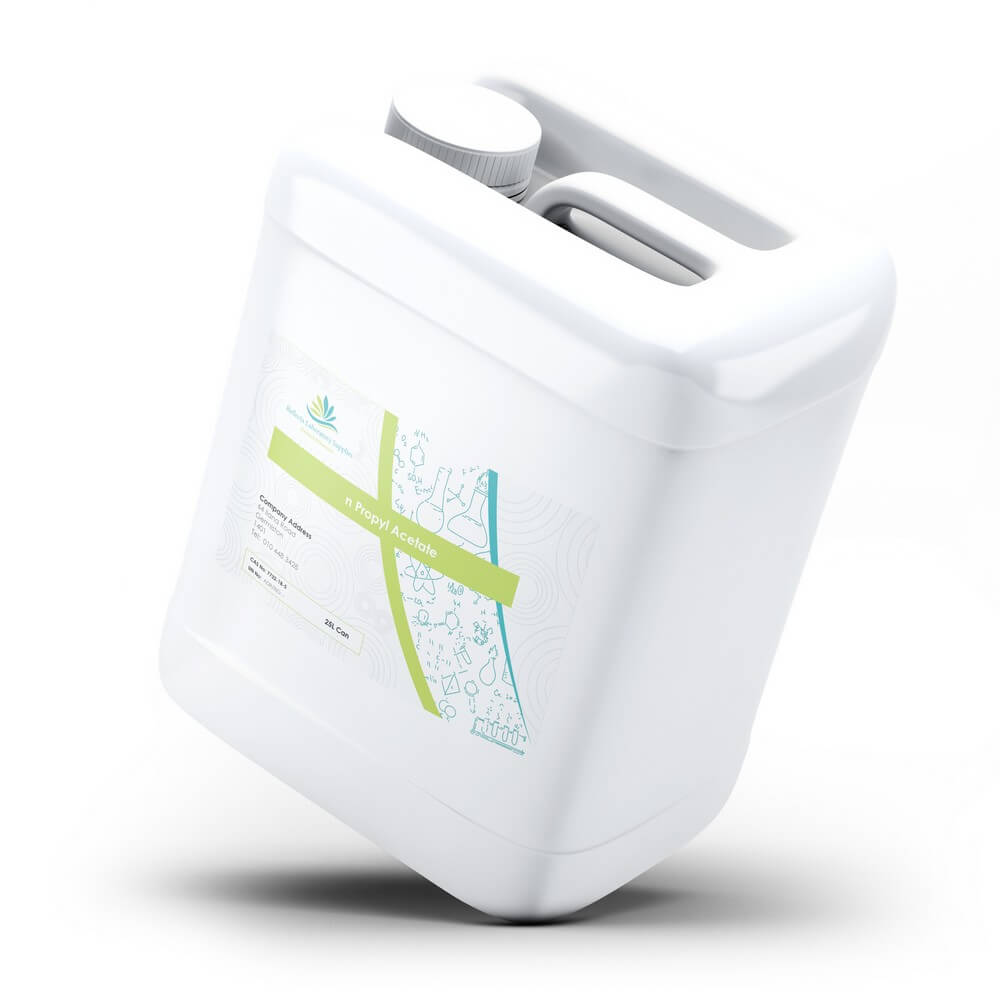
Product Name n-Propyl acetate
Cat No. : AC158290000; AC158290010; AC158290025; AC158290100; AC158291000; AC158295000
- Hazard(s) identification
CAS No 109-60-4
Synonyms 1-Propyl Acetate.; Acetic Acid N-Propyl Ester
Recommended Use Laboratory chemicals.
Uses advised against Food, drug, pesticide or biocidal product use.
Classification
This chemical is considered hazardous by the 2012 OSHA Hazard Communication Standard (29 CFR 1910.1200)
| Flammable liquids Category 2
Serious Eye Damage/Eye Irritation Category 2 Specific target organ toxicity (single exposure) Category 3 Target Organs – Central nervous system (CNS). |
Label Elements
Signal Word
Danger
n Propyl Acetate – Hazard Statements
Highly flammable liquid and vapor
Causes serious eye irritation
May cause drowsiness or dizziness
Precautionary Statements
Prevention
Wash face, hands and any exposed skin thoroughly after handling
Avoid breathing dust/fume/gas/mist/vapors/spray
Use only outdoors or in a well-ventilated area
Keep away from heat/sparks/open flames/hot surfaces. – No smoking
Keep container tightly closed
Ground/bond container and receiving equipment
Use explosion-proof electrical/ventilating/lighting equipment
Use only non-sparking tools
Take precautionary measures against static discharge
Wear protective gloves/protective clothing/eye protection/face protection
Keep cool
- Composition/Information on Ingredients
Inhalation
IF INHALED: Remove victim to fresh air and keep at rest in a position comfortable for breathing Call a POISON CENTER or doctor/physician if you feel unwell
Skin
- n Propyl Acetate – First-aid measures
IF ON SKIN (or hair): Take off immediately all contaminated clothing. Rinse skin with water/shower Eyes
IF IN EYES: Rinse cautiously with water for several minutes. Remove contact lenses, if present and easy to do. Continue rinsingIf eye irritation persists: Get medical advice/attention
Fire
In case of fire: Use CO2, dry chemical, or foam for extinction
Storage
Store in a well-ventilated place. Keep container tightly closed
Store locked up
Disposal
Dispose of contents/container to an approved waste disposal plant
Hazards not otherwise classified (HNOC)
Repeated exposure may cause skin dryness or cracking
| Component | CAS No | Weight % |
| n-Propyl acetate | 109-60-4 | >95 |
Eye Contact Rinse immediately with plenty of water, also under the eyelids, for at least 15 minutes. Getmedical attention.
Skin Contact Wash off immediately with plenty of water for at least 15 minutes. Get medical attention if symptoms occur.
Inhalation Remove to fresh air. If breathing is difficult, give oxygen. Get medical attention if symptomsoccur.
- Fire-fighting measures
Ingestion Do NOT induce vomiting. Get medical attention. Difficulty in breathing. Inhalation of high vapor concentrations may cause symptoms like
Most important symptoms and
effects
headache, dizziness, tiredness, nausea and vomiting
Notes to Physician Treat symptomatically
Suitable Extinguishing Media Water spray, carbon dioxide (CO2), dry chemical, alcohol-resistant foam. Water mist maybe used to cool closed containers.
Unsuitable Extinguishing Media No information available
Flash Point 10 °C / 50 °F
Method – No information available
Autoignition Temperature 450 °C / 842 °F
NFPA 6. Accidental release measures
Explosion Limits
Upper 8.0 vol %
Lower 1.8 vol %
Sensitivity to Mechanical Impact No information available
Sensitivity to Static Discharge No information available
Specific Hazards Arising from the Chemical
Flammable. Risk of ignition. Vapors may form explosive mixtures with air. Vapors may travel to source of ignition and flash back. Containers may explode when heated. Thermal decomposition can lead to release of irritating gases and vapors. Keep product and Handling and storage
empty container away from heat and sources of ignition.
Hazardous Combustion Products
Carbon monoxide (CO). Carbon dioxide (CO2).
Protective Equipment and Precautions for Firefighters
As in any fire, wear self-contained breathing apparatus pressure-demand, MSHA/NIOSH (approved or equivalent) and full protective gear.
n Propyl Acetate – Health
Flammability
Instability
Physical hazards
2
3
0
N/A
Personal Precautions Use personal protective equipment as required. Remove all sources of ignition. Takeprecautionary measures against static discharges. Ensure adequate ventilation. Avoid
contact with skin, eyes or clothing.
Environmental Precautions Avoid release to the environment. See Section 12 for additional Ecological Information. Remove all sources of ignition. Soak up with inert absorbent material. Keep in suitable,
Methods for Containment and Clean
Up
closed containers for disposal. Use spark-proof tools and explosion-proof equipment.
| 7. |
n Propyl Acetate – Handling Wear personal protective equipment/face protection. Ensure adequate ventilation. Usespark-proof tools and explosion-proof equipment. Keep away from open flames, hot
surfaces and sources of ignition. Take precautionary measures against static discharges.
Avoid contact with skin, eyes or clothing. Avoid ingestion and inhalation.
Storage. Keep containers tightly closed in a dry, cool and well-ventilated place. Keep away fromheat, sparks and flame. Flammables area. Incompatible Materials. Acids. Bases. Strong
- Exposure controls / personal protection
oxidizing agents.
Exposure Guidelines
| Component | ACGIH TLV | OSHA PEL | NIOSH IDLH | Mexico OEL (TWA) |
| n-Propyl acetate | TWA: 100 ppm
STEL: 150 ppm |
(Vacated) TWA: 200 ppm(Vacated) TWA: 840 mg/m3
(Vacated) STEL: 250 ppm(Vacated) STEL: 1050 mg/m3 TWA: 200 ppm TWA: 840 mg/m3 |
IDLH: 1700 ppm
TWA: 200 ppm TWA: 840 mg/m3 STEL: 250 ppm STEL: 1050 mg/m3 |
TWA: 200 ppm
STEL: 250 ppm |
Legend
ACGIH – American Conference of Governmental Industrial Hygienists
- Physical and chemical properties
OSHA – Occupational Safety and Health Administration
NIOSH IDLH: NIOSH – National Institute for Occupational Safety and Health
Engineering Measures Ensure adequate ventilation, especially in confined areas. Use explosion-proof electrical/ventilating/lighting equipment. Ensure that eyewash stations and safety showers
are close to the workstation location.
Personal Protective Equipment
Eye/face Protection Wear appropriate protective eyeglasses or chemical safety goggles as described byOSHA’s eye and face protection regulations in 29 CFR 1910.133 or European Standard
EN166.
Skin and body protection Wear appropriate protective gloves and clothing to prevent skin exposure.
Respiratory Protection Follow the OSHA respirator regulations found in 29 CFR 1910.134 or European StandardEN 149. Use a NIOSH/MSHA or European Standard EN 149 approved respirator if
exposure limits are exceeded or if irritation or other symptoms are experienced.
Hygiene Measures Handle in accordance with good industrial hygiene and safety practice.
Physical State Liquid
Appearance Colorless
Odor sweet
Odor Threshold No information available pH No information available Melting Point/Range -95 °C / -139 °F Boiling Point/Range 102 °C / 215.6 °F @ 760 mmHg Flash Point 10 °C / 50 °F Evaporation Rate No information available Flammability (solid,gas) No information available Flammability or explosive limits
Upper 8.0 vol % Lower 1.8 vol % Vapor Pressure 33 mbar @ 20 °C Vapor Density 3.5 (Air = 1.0)
Specific Gravity 0.880
Solubility No information available Partition coefficient; n-octanol/water No data available Autoignition Temperature 450 °C / 842 °F Decomposition Temperature No information available
- Stability and reactivity
Toxicological information
Viscosity 0.58 mPa s at 20 °C Molecular Formula C5 H10 O2
Molecular Weight 102.13
| 1 |
n Propyl Acetate – Reactive Hazard None known, based on information available Stability Stable under normal conditions.
Conditions to Avoid Keep away from open flames, hot surfaces and sources of ignition. Incompatible products.Excess heat.
Incompatible Materials Acids, Bases, Strong oxidizing agents
Hazardous Decomposition Products Carbon monoxide (CO), Carbon dioxide (CO2)
Hazardous Polymerization Hazardous polymerization does not occur.
Hazardous Reactions None under normal processing.
| 11. |
Acute Toxicity
Product Information
Component Information
| Component | LD50 Oral | LD50 Dermal | LC50 Inhalation |
| n-Propyl acetate | LD50 = 8700 mg/kg ( Rat ) | LD50 > 17756 mg/kg ( Rabbit ) | LC50 = 32 mg/L ( Rat ) 4 h |
No information available
n Propyl Acetate – Toxicologically Synergistic
Products
Delayed and immediate effects as well as chronic effects from short and long-term exposure Irritation Irritating to eyes
Sensitization No information available
Carcinogenicity The table below indicates whether each agency has listed any ingredient as a carcinogen.
| Component | CAS No | IARC | NTP | ACGIH | OSHA | Mexico |
| n-Propyl acetate | 109-60-4 | Not listed | Not listed | Not listed | Not listed | Not listed |
Mutagenic Effects No information available
Reproductive Effects No information available.
Developmental Effects No information available.
Teratogenicity No information available.
STOT – single exposure Central nervous system (CNS)
STOT – repeated exposure None known
Aspiration hazard No information available
Inhalation of high vapor concentrations may cause symptoms like headache, dizziness,
Symptoms / effects,both acute and
delayed
tiredness, nausea and vomiting
Endocrine Disruptor Information No information available
Other Adverse Effects The toxicological properties have not been fully investigated.
- Disposal considerations
complete information.
| 1 |
Ecotoxicity
- n Propyl Acetate – Transport information
This product contains the following substance(s) which are hazardous for the environment.
| Component | Freshwater Algae | Freshwater Fish | Microtox | Water Flea |
| n-Propyl acetate | Not listed | LC50: 56 – 64 mg/L, 96h
static (Pimephales promelas) LC50: 56 – 64 mg/L, 96hflow-through (Pimephalespromelas) |
Not listed | Not listed |
Persistence and Degradability No information available
Bioaccumulation/ Accumulation No information available.
Mobility No information available.
| 1 |
Waste Disposal Methods Chemical waste generators must determine whether a discarded chemical is classified as ahazardous waste. Chemical waste generators must also consult local, regional, and
national hazardous waste regulations to ensure complete and accurate classification.
Packing Group II5. Regulatory information
| 1 |
DOT
UN-No UN1276
Proper Shipping Name N-PROPYL ACETATE
Hazard Class 3
Packing Group II
TDG
UN-No UN1276
Proper Shipping Name N-PROPYL ACETATE
Hazard Class 3
Packing Group II
IATA
UN-No UN1276
Proper Shipping Name n-PROPYL ACETATE
Hazard Class 3
Packing Group II
IMDG/IMO
UN-No UN1276
Proper Shipping Name PROPYL ACETATE
Hazard Class 3
| 1 |
United States of America Inventory
| Component | CAS No | TSCA | TSCA Inventory notification –
Active-Inactive |
TSCA – EPA RegulatoryFlags |
| n-Propyl acetate | 109-60-4 | X | ACTIVE | – |
Legend:
TSCA US EPA (TSCA) – Toxic Substances Control Act, (40 CFR Part 710)
X – Listed
‘-‘ – Not Listed
TSCA 12(b) – Notices of Export Not applicable
International Inventories
Canada (DSL/NDSL), Europe (EINECS/ELINCS/NLP), Philippines (PICCS), Japan (ENCS), Japan (ISHL), Australia (AICS), China (IECSC), Korea(KECL).
| Component | CAS No | DSL | NDSL | EINECS | PICCS | ENCS | ISHL | AICS | IECSCKECL |
| n-Propyl acetate | 109-60-4 | X | – 203-686-1 | X | X | X | X | XKE-29778 |
KECL – NIER number or KE number (http://ncis.nier.go.kr/en/main.do)
U.S. Federal Regulations
SARA 313 Not applicable
SARA 311/312 Hazard Categories See section 2 for more information
CWA (Clean Water Act) Not applicable
Clean Air Act Not applicable
Not applicable
OSHA – Occupational Safety and
Health Administration
CERCLA Not applicable
California Proposition 65 This product does not contain any Proposition 65 chemicals.
U.S. State Right-to-Know
Regulations
| Component | Massachusetts | New Jersey | Pennsylvania | Illinois | Rhode Island |
| n-Propyl acetate | X | X | X | – | X |
U.S. Department of Transportation
Reportable Quantity (RQ): N
DOT Marine Pollutant N
DOT Severe Marine Pollutant N
This product does not contain any DHS chemicals.
U.S. Department of Homeland
Security
Other International Regulations
Mexico – Grade No information available
Authorisation/Restrictions according to EU REACH
| Component | REACH (1907/2006) – Annex XIV -Substances Subject to
Authorization |
REACH (1907/2006) – Annex XVII -Restrictions on Certain Dangerous
Substances |
REACH Regulation (EC
1907/2006) article 59 – Candidate List of Substances of Very High Concern (SVHC) |
| n-Propyl acetate | – | Use restricted. See item 75.
(see link for restriction details) |
– |
https://echa.europa.eu/substances-restricted-under-reach
Safety, health and environmental regulations/legislation specific for the substance or mixture
| Component | CAS No | OECD HPV | Persistent Organic | Ozone Depletion | Restriction of |
- Other information
| Pollutant | Potential | Hazardous
Substances (RoHS) |
|||
| n-Propyl acetate | 109-60-4 | Listed | Not applicable | Not applicable | Not applicable |
| Component | CAS No | Seveso III Directive
(2012/18/EC) – Qualifying Quantitiesfor Major AccidentNotification |
Seveso III Directive(2012/18/EC) –
Qualifying Quantitiesfor Safety Report Requirements |
Rotterdam
Convention (PIC) |
Basel Convention(Hazardous Waste) |
| n-Propyl acetate | 109-60-4 | Not applicable | Not applicable | Not applicable | Not applicable |
| 1 |
Disclaimer
The information provided in this Safety Data Sheet is correct to the best of our knowledge, information and belief at the date of its publication. The information given is designed only as a guidance for safe handling, use, processing, storage, transportation, disposal and release and is not to be considered a warranty or quality specification. The information relates only to the specific material designated and may not be valid for such material used in combination with any other materials or in any process, unless specified in the text
DisclaimerThe information stated above is considered to be correct, but does not claim to be inclusive and shall only be used as a guideline. The information provided by this document is confirmed by our continuous updating of knowledge and adheres to the products appropriate safety precautions. It does not represent any guarantee of the product’s
properties. RLS Chemicals and its Associates shall not be held accountable for any damage’s consequent of handling the above product
Add to Wishlist
Add to Wishlist